Perplexity vs DeepSeek (2026): Privacy, API Alternatives & Which AI Is Better?
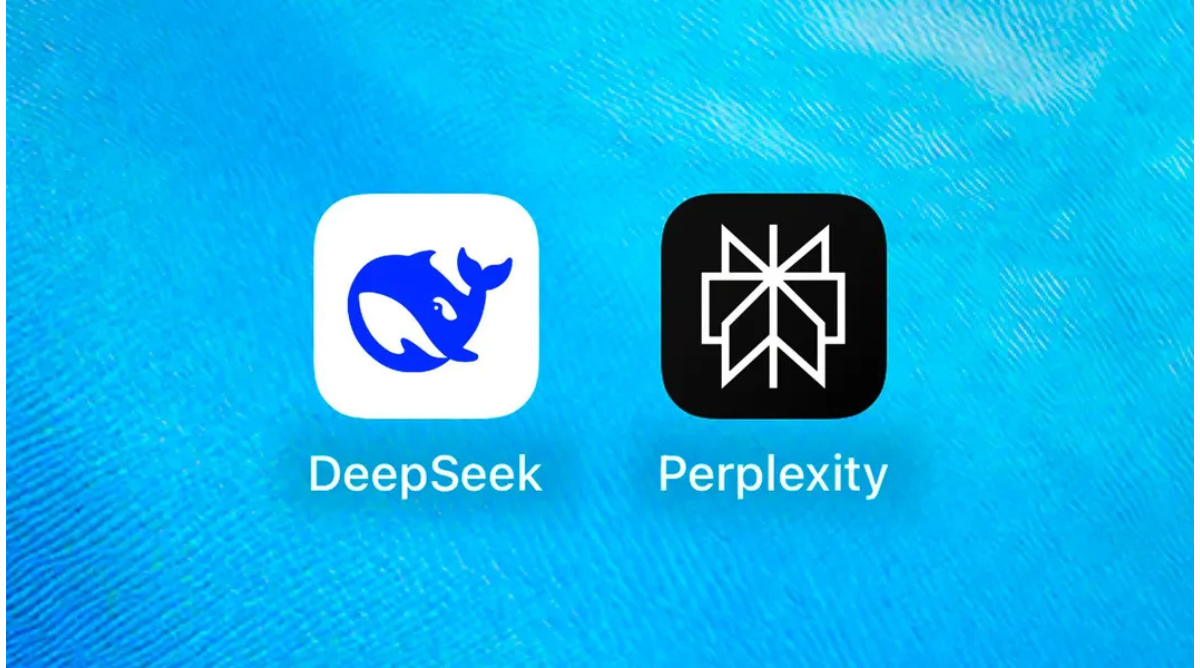
In 2026, the AI landscape has moved far beyond generic chatbots and split into two clear categories: AI search engines and reasoning-first large language models (LLMs). This shift is best illustrated in the Perplexity vs DeepSeek comparison. While both tools are powerful, they are built to solve fundamentally different problems.
Perplexity AI positions itself as an AI answer engine, combining real-time web search, retrieval-augmented generation (RAG), and transparent citations to deliver fast, verifiable answers. DeepSeek AI, by contrast, is a reasoning-first LLM platform, optimized for deep logical inference, coding, advanced mathematics, and cost-efficient API usage at scale.
The real question in Perplexity vs DeepSeek (2026) is not which AI is “better,” but which AI fits your workflow. Do you need current information with trusted sources, or deep reasoning power at minimal cost?
This guide breaks down architecture, features, pricing, and real-world use cases so you can choose confidently without hype.
Explore more expert AI comparisons and tools on our Home page to build the right AI stack for your needs.
Perplexity vs DeepSeek Quick Verdict (TL;DR)
| Who / Need | Choose Perplexity AI | Choose DeepSeek AI | Use Both (Best Strategy) |
| Core Job | Research & search with live data | Deep reasoning for hard problems | Search → analyze → decide |
| Primary Strength | Real-time web search + citations | Logic, coding, math depth | Verified facts + elite reasoning |
| Accuracy Type | 93.9% SimpleQA (factual, cited) | 97.3% MATH-500, 95%+ coding | Grounded reasoning |
| Speed | ~0.8s quick answers; minutes for Deep Research | Slower (prioritizes thinking) | Fast discovery, deep analysis |
| Cost Model | $20/mo Pro (fixed, easy) | $0.28/M tokens (scales cheaply) | Low total cost, high output |
| Ease of Use | Non-technical UI | API-first / developer-centric | Simple UI + powerful engine |
| Best For | Students, researchers, journalists, SEO, execs | Developers, engineers, data scientists | Teams with mixed workflows |
| Why It Wins | Current info, verifiable sources, low hallucination | Depth, efficiency, open-source control | End-to-end productivity |
One-line decision rule:
- Current information + citations → Perplexity AI
- Deep reasoning + cost efficiency → DeepSeek AI
- Both matter → Perplexity Pro with DeepSeek R1
Why This Comparison Matters in 2026
This comparison matters because AI usage has split into specialized tools, not general-purpose chatbots. In 2025, users choose between AI answer engines like Perplexity AI and reasoning-first LLMs like DeepSeek AI based on workflow, not hype.
Three forces drive this shift. First, AI search replaced link lists. Perplexity AI delivers real-time answers with citations, cutting research time from hours to seconds. Second, open-source reasoning models changed the economics. DeepSeek R1 matches frontier reasoning performance at ~27× lower cost, making deep logic affordable at scale. Third, integration vs raw power now matters. Perplexity integrates DeepSeek R1 for reasoning, while preserving search, UI, and citations these are complementary architectures, not copies.
There’s also SERP confusion around privacy and geopolitics. Using DeepSeek via Perplexity mitigates data residency concerns by hosting models on US/EU servers.
Privacy & Data Residency: DeepSeek vs Perplexity (China Data Concerns)
One of the biggest 2026 concerns is data jurisdiction.
DeepSeek Standalone (Cloud)
Operates through infrastructure associated with Chinese jurisdiction.
Data policies vary depending on deployment.
Raises compliance questions for some Western enterprises.
DeepSeek Self-Hosted (Open Source)
Fully private if deployed internally.
No external data transfer.
Best option for maximum control.
Perplexity AI (Including DeepSeek R1 Integration)
Hosted on US/EU infrastructure.
Enterprise tiers provide no-training guarantees.
DeepSeek R1 runs inside Perplexity’s controlled environment.
Data does not route to China-hosted DeepSeek servers.
If You Need DeepSeek Without China Data Risk
Best options:
Use DeepSeek R1 inside Perplexity Pro.
Self-host DeepSeek locally.
Choose alternative API providers hosted in US/EU.
Bottom Line:
If jurisdiction matters → Perplexity or self-hosted DeepSeek.
If cost matters more → Direct DeepSeek API.
Does Perplexity Use DeepSeek?
Yes selectively.
Perplexity Pro allows users to choose DeepSeek R1 (R1-1776 variant) as a reasoning backend.
However:
Perplexity remains the search layer.
Perplexity controls citations.
Perplexity hosts the infrastructure.
It is not the same as using DeepSeek standalone.
Perplexity is not owned by DeepSeek.
DeepSeek is not replacing Perplexity.
It is a backend reasoning option inside the Perplexity platform.
What Is Perplexity AI?
Perplexity AI is a conversational AI answer engine designed to replace traditional search for research, fact-checking, and real-time discovery. Instead of showing blue links, it searches the live web, reads multiple sources, and delivers direct, summarized answers with inline citations.
What makes Perplexity AI different from chatbots is citation grounding. Every factual claim links back to a source, which keeps hallucinations low and makes answers usable for academic, professional, and compliance-sensitive work. In 2025, this approach positions Perplexity as “Google with reasoning” rather than a creative chatbot.
Read the full comparison: DeepSeek vs ChatGPT
How Perplexity AI Works (AI Search Engine Model)
Perplexity AI uses a search-first, retrieval-augmented generation (RAG) architecture built for speed, freshness, and trust.
Core steps:
- Intent interpretation: Uses NLP to understand full questions, not keywords.
- Real-time retrieval: Searches live web sources news, academic databases, forums at query time.
- Intelligent model routing: Automatically selects the best model (e.g., GPT-5.2, Claude Sonnet, DeepSeek R1, or Sonar) based on task complexity.
- Synthesis + grounding: Summarizes findings into a coherent answer with clickable citations.
- Conversational continuity: Maintains context for follow-up questions while refreshing sources.
This design enables ~0.8s responses, rapid indexing of breaking news, and verifiable outputs a sharp contrast to reasoning-first LLMs without web access.
Perplexity AI Key Features
Perplexity AI is optimized for research productivity, not raw generation.
Key capabilities:
- Real-time AI search with continuous web updates
- Inline citations for every factual claim
- Pro Search & Deep Research for multi-step, iterative analysis
- Document & media analysis (PDFs, CSVs, images, video) alongside web data
- Model selector while preserving search + citations
- Collaborative Spaces for teams and shared research
- Comet AI Browser for instant page summaries and context
These features make Perplexity AI reliable for production-ready research, where trust and recency matter more than speculation.
Who Perplexity AI Is Best For
Perplexity AI fits users who prioritize fast, verified answers:
- Students & academics: Cited sources for essays and papers
- Researchers & journalists: Real-time verification and multi-source synthesis
- SEO & content professionals: Live SERP trends, fact-checking, topical research
- Professionals & decision-makers: Rapid insights for markets, regulation, and strategy
- Everyday users: Clean, ad-free answers instead of link clutter
Not ideal for API-heavy development or pure offline reasoning that’s where DeepSeek AI excels.
What Is DeepSeek AI?
DeepSeek AI is a reasoning-first AI model platform built for deep logic, coding, mathematics, and scalable deployment. In 2025, it stands out for delivering frontier-level reasoning performance comparable to leading closed-source models while remaining open-source and dramatically cheaper to run.
Unlike Perplexity AI, which is UX- and search-centric, DeepSeek is model-centric. It does not prioritize interface polish, citations, or real-time web search. Instead, it focuses on how the model thinks, giving developers and researchers direct access to raw reasoning power via APIs or self-hosted deployments.
This positioning makes DeepSeek AI a foundation layer for engineering teams, not a consumer research tool.
Read the full comparison: Grok vs DeepSeek
How DeepSeek AI Works (Reasoning-First LLM)
DeepSeek AI uses a model-first architecture optimized for depth, accuracy, and efficiency, not speed.
Key mechanisms include:
- Reasoning-first training: Models like DeepSeek R1 are trained using large-scale reinforcement learning (RL) without human-annotated reasoning. The model learns by trial and error, developing Chain-of-Thought (CoT) reasoning organically.
- Multi-step inference: The model explores multiple solution paths, self-corrects, and verifies logic before answering often generating internal “thinking tokens” during the process.
- Long-context reasoning: Supports up to 128K tokens, enabling full codebase analysis, long proofs, and extended technical documents.
- Mixture-of-Experts (MoE): Activates only the necessary “expert” sub-models (≈37B of 671B parameters), improving efficiency.
- Advanced attention (MLA + sparse attention): Compresses memory usage so DeepSeek can reason over massive contexts without prohibitive compute costs.
- Tool-use reasoning: Newer versions reason while calling tools and APIs, enabling agentic workflows.
This design prioritizes accuracy and depth over instant responses, making DeepSeek ideal for problems that cannot be solved by search alone.
DeepSeek AI Key Features
DeepSeek AI is built for capability and control, not convenience:
- Deep reasoning models: DeepSeek R1, V3.2, and specialized variants for logic-heavy tasks
- Coding & STEM dominance: ~95% HumanEval (coding), 97.3% MATH-500, elite math benchmarks
- Semantic understanding: Long-document synthesis and structured reasoning
- API-first customization: Control system prompts, reasoning depth, token budgets, caching, and tools
- Open-source models: Full weights available; fine-tune or self-host privately
- Cost efficiency: $0.28 per million input tokens, ~27× cheaper than proprietary peers
- Context caching: Up to 90% cost reduction on repeated inputs
- Agentic workflows: Function calling, tool execution, and automation
- Multimodal reasoning: Text + vision (Janus models) for technical analysis
These capabilities make DeepSeek AI a reasoning engine, not a research interface.
Who DeepSeek AI Is Best For
DeepSeek AI is ideal for users who need deep reasoning at scale:
- Developers & AI engineers: API integration, agentic systems, production-grade reasoning
- STEM professionals & students: Advanced math, physics, chemistry, and engineering logic
- Data scientists & researchers: Hypothesis testing, algorithm design, long-context analysis
- Cost-conscious startups: High-volume inference without enterprise pricing
- Privacy-focused teams: Self-host open-source models so data never leaves internal infrastructure
Not ideal for real-time research, citation-heavy academic work, or non-technical users those workflows are better served by Perplexity AI.
DeepSeek API Alternatives (2026)
If you are searching for DeepSeek API alternatives, here are structured options:
1 Perplexity API (Search + RAG Layer)
Adds live web search
Adds citations
Easier integration for research-heavy apps
Higher cost than raw DeepSeek
2 Self-Hosted DeepSeek
Maximum privacy
Full parameter control
Infrastructure overhead required
3 Claude / GPT-Class APIs
Higher cost
More polished ecosystem
Enterprise compliance ready
When to Choose an Alternative
Concerned about China data routing → Use Perplexity or self-host
Need search + reasoning combined → Perplexity
Need ultra-cheap reasoning at scale → DeepSeek direct API
Core Difference AI Search Engine vs AI Reasoning Model
In 2025, this comparison represents a clean divide between retrieval and reasoning.
- Perplexity AI is a search-first AI answer engine. Its intelligence is optimized to find, verify, and synthesize what already exists on the live internet using retrieval-augmented generation (RAG).
- DeepSeek AI is a model-first reasoning engine. Its intelligence is optimized to think through complex problems from first principles, even when no answer exists online.
This architectural split defines every practical tradeoff: speed, trust, depth, cost, and ideal use case.
Read the full comparison: Perplexity vs Claude
Speed & Citations (Perplexity’s Strength)
Perplexity AI is optimized for actionable accuracy.
Why it wins:
- Real-time velocity: Scans hundreds of sources in seconds for breaking events.
- Instant verification: Every claim includes a clickable citation (IMF, journals, news, Reddit, PDFs).
- Low hallucination risk: Answers are grounded in sources, not guesswork.
- Decision trust: Users can verify before acting.
Best for: “I need to know what’s happening right now and prove it.”
Depth & Reasoning (DeepSeek’s Strength)
DeepSeek AI is optimized for computational logic, not speed.
Why it wins:
- Extended thinking time: The model may reason for 30–60 seconds (or longer) before answering.
- Multi-path logic: Explores alternatives, corrects errors, and self-verifies.
- Long-context inference: Handles 128K tokens for full codebases and proofs.
- Transparent reasoning: Shows internal thinking, valuable for learning and debugging.
Best for: “I need to build or solve something complex from scratch.”
Speed vs Depth What You Trade Off
You must choose one primary advantage.
| Choice | You Gain | You Lose | Best For | Worst For |
| Perplexity AI (Speed) | Real-time facts, citations, fast answers | Deep multi-step reasoning | Current events, research, fact-checking | Novel math, deep engineering |
| DeepSeek AI (Depth) | Long-form reasoning, logic, cost efficiency | Live data, citations | Coding, math, system design | News, time-sensitive facts |
2025 Pro Tip:
Most power users now treat Perplexity as their “browser” and DeepSeek as their “compiler/editor.”
Feature-by-Feature Comparison
This comparison focuses on how each tool actually performs in real workflows. There’s no single winner each feature favors a different priority depending on whether you value fresh information, deep reasoning, developer control, or ease of use.
Real-Time Web Search & Citations
| Capability | Perplexity AI | DeepSeek AI |
| Live web search | ✅ Native, search-first | ❌ Not core (training data–dependent) |
| Citation system | ✅ Inline, clickable sources | ❌ No built-in citations |
| Source diversity | News, academic PDFs, Reddit, YouTube, finance | Limited / inconsistent |
| Freshness | Minutes-old updates | Static knowledge |
| Factual accuracy | 93.9% SimpleQA (grounded) | Domain-specific only |
Perplexity AI is the gold standard for real-time research. Its Sonar-based retrieval pulls from thousands of live sources and verifies every claim, making it reliable for journalism, compliance, SEO, and academic work.
DeepSeek AI treats web access as secondary. Even where limited browsing exists, it lacks breadth, speed, and citation grounding.
Reasoning Depth & Long Context
| Capability | Perplexity AI | DeepSeek AI |
| Reasoning style | Search-guided synthesis | First-principles reasoning |
| Context window | Search-limited | ✅ 128K tokens |
| Thinking time | Short, optimized | ✅ Extended (30–60s+) |
| Novel problem solving | Limited by sources | ✅ Strong (RL-trained) |
| Math benchmarks | N/A | 79.8% AIME, 97.3% MATH-500 |
DeepSeek AI clearly leads in reasoning depth. Its reinforcement learning (RL) training enables Chain-of-Thought reasoning that explores alternatives, self-corrects, and solves problems that don’t exist online.
Perplexity AI reasons well within retrieved sources but does not pursue long internal logic chains.
Data Analysis, Coding & Math
| Task | Perplexity AI | DeepSeek AI | Winner |
| Coding accuracy | Model-dependent | 95% HumanEval | DeepSeek |
| Math reasoning | Good (search-backed) | 97.3% MATH-500 | DeepSeek |
| Data analysis | Real-time CSV/PDF analysis | Deep inference & modeling | Tie |
| Algorithm design | Limited | ✅ Strong | DeepSeek |
| Docs & examples | ✅ Real-time | ❌ Training-only | Perplexity |
DeepSeek AI dominates creation and debugging multi-file architectures, algorithms, and STEM problems.
Perplexity AI excels at researching technical answers latest docs, Stack Overflow threads, and current libraries.
Ease of Use vs Customization
| Dimension | Perplexity AI | DeepSeek AI |
| User interface | ✅ Polished, conversational | ❌ Minimal / technical |
| Setup required | None | API or local setup |
| Customization | Limited | ✅ Full control |
| Local privacy | ❌ Cloud-only | ✅ Self-host (open-source) |
| Target user | General users | Developers / power users |
Perplexity AI is designed to “just work” web, mobile, desktop, and browser-integrated.
DeepSeek AI is designed to be engineered API tuning, local deployment, and agentic workflows.
RAG AI Search: Perplexity vs DeepSeek
Perplexity is a full RAG search engine:
Live web retrieval
Neural reranking
Inline citations
Real-time indexing
DeepSeek is not a native RAG search tool.
It can be integrated into RAG systems, but does not provide:
Built-in web crawling
Native citation layer
Source indexing infrastructure
If you want a production-ready RAG search platform → Perplexity.
If you want a reasoning model inside your own RAG stack → DeepSeek.
Perplexity AI with DeepSeek R1 What This Actually Means
In 2025, one of the biggest SERP misunderstandings is the claim that Perplexity AI “is now DeepSeek”. This is false. What changed is backend reasoning integration, not the product itself.
The correct mental model:
- Perplexity AI = the platform (AI search engine, real-time web retrieval, citations, UI, workflows)
- DeepSeek R1 = a reasoning engine (step-by-step logic, math, coding depth)
Perplexity uses DeepSeek R1 to enhance reasoning, but Perplexity still controls search, citations, speed, and UX. The result is a hybrid system, not feature parity with standalone DeepSeek.
Read the full comparison: Perplexity vs Gemini
What DeepSeek R1 Is
DeepSeek R1 is an open-source, reasoning-first LLM designed for complex logical, mathematical, and coding problems.
Key characteristics:
- Chain-of-Thought reasoning: R1 “thinks” step-by-step, verifying logic before answering.
- Reinforcement-learning training: Learns reasoning patterns without human-labeled CoT examples.
- Extended thinking time: May reason for tens of seconds to reach accurate conclusions.
- Long context support: Up to 128K tokens for codebases, proofs, and technical texts.
- Open-source availability: Allows inspection, self-hosting, and fine-tuning.
On its own, R1 is a raw reasoning engine, not a search or citation tool.
How Perplexity Uses DeepSeek R1
When DeepSeek R1 appears inside Perplexity Pro, it operates within Perplexity’s controlled pipeline:
- Live search (Perplexity-controlled): Perplexity retrieves up-to-date web sources.
- Reasoning layer (R1-powered): DeepSeek R1 applies deep, multi-step logic to analyze those sources.
- Verification layer (Perplexity-controlled): Perplexity adds inline citations and formats the response.
Important enhancements:
- Web-enhanced reasoning: R1 reasons with live data, not static training.
- R1-1776 variant: A U.S.-hosted, uncensored version that avoids regional filtering.
- Transparent thinking: Users can optionally view the reasoning process during analysis.
What you gain:
- Elite reasoning depth
- Real-time data + citations
- Lower hallucination risk
What you lose:
- Full parameter control
- Raw API-level access
- Maximum context limits of standalone R1
Why This Is Not DeepSeek Standalone
Using DeepSeek R1 via Perplexity is fundamentally different from using DeepSeek standalone.
| Aspect | Perplexity + R1 | Standalone DeepSeek |
| Web search | ✅ Live, real-time | ❌ None |
| Citations | ✅ Inline, verifiable | ❌ Not provided |
| Hosting | U.S./Canada servers | Varies (self / provider) |
| Customization | Limited | ✅ Full control |
| Deployment | Perplexity UX | ✅ API / self-host |
| Purpose | Research-ready answers | Pure reasoning engine |
Analogy:
R1 in Perplexity is a powerful engine inside a refined vehicle.
Standalone R1 is the engine block itself raw, flexible, and demanding skill to use.
DeepSeek R1 vs DeepSeek Standalone
This distinction is model vs platform, not feature parity.
- DeepSeek R1 is a reasoning model (RL-trained LLM) that can be embedded into third-party platforms.
- DeepSeek Standalone refers to using DeepSeek’s own web app or direct API without any external orchestration layer.
Practical differences that matter in 2025
| Dimension | Perplexity + DeepSeek R1 | DeepSeek Standalone |
| What you’re using | R1 as a backend reasoning engine | R1/V3 as a direct model |
| Web search | ✅ Real-time (Perplexity RAG) | ❌ None (training-only) |
| Citations | ✅ Clickable sources | ❌ No native citations |
| Hosting & data | US/EU servers | Often China-based |
| Customization | Limited (UI-controlled) | ✅ Full prompt + system control |
| Reliability | High (Perplexity infra) | Variable (capacity throttling reported) |
| Best for | Research + reasoning | Apps, automation, scale |
Key insight:
Using R1 via Perplexity gives you safe, cited reasoning.
Using DeepSeek standalone gives you maximum control and scale with more responsibility.
Pricing & Cost Efficiency Comparison
In 2025, the decision is no longer “which AI is best?”
It is which cost model matches your workload.
- Perplexity monetizes convenience and aggregation
- DeepSeek monetizes raw reasoning compute
This creates two fundamentally different value curves.
Perplexity AI Free vs Pro
Perplexity follows a freemium research SaaS model.
| Feature | Free | Pro ($20/month) |
| Quick searches | Unlimited | Unlimited |
| Pro searches | Limited/day | ~600+/day practical |
| Deep Research | ❌ | ✅ |
| Model access | Standard | R1, GPT-5.x, Claude 4, Gemini |
| File analysis | Limited | Unlimited |
| Image/video tools | ❌ | ✅ |
| Setup required | None | None |
Why users upgrade
- No API keys
- No token counting
- One interface for multiple frontier models
- Predictable monthly cost
Best fit
- Students
- Researchers
- SEO & content teams
- Professionals needing verified answers fast
DeepSeek API Pricing & Free Usage
DeepSeek’s value proposition is cost-per-reasoning-unit.
Free tier
- Millions of tokens/day
- No credit card
- Ideal for learning and prototyping
API economics (2025 averages)
- Input: ~$0.28 per 1M tokens
- Output: ~$0.42 per 1M tokens
- Cache-hit input: ~$0.028 per 1M tokens
- Context: 128K tokens
Why developers choose it
- 10×–30× cheaper than comparable proprietary reasoning models
- Linear scaling (no hidden caps)
- Open-source + self-hosting options
- Ideal for automation, agents, and apps
Best fit
- Developers
- AI engineers
- Startups
- High-volume reasoning systems
Cost vs Performance Trade-Off (2025 Reality)
Pricing aligns directly with speed vs depth.
| Workload | Perplexity | DeepSeek | Winner |
| Casual research | Free | Free | Tie |
| Daily research (20+/day) | $20/mo | ~$5–10/mo | Perplexity (ease) |
| Heavy API use | ❌ Caps | ~$100/mo | DeepSeek |
| Teams (non-technical) | $40/user | Engineering overhead | Perplexity |
| Large-scale automation | ❌ | Scales cleanly | DeepSeek |
Reality check
- Perplexity = fixed cost, low friction
- DeepSeek = variable cost, high control
- Hybrid users often land at $20–70/month total
Which Tool Is Better for Your Use Case?
In 2025, the “better” AI is not universal. The right choice depends on whether your task requires verified external data or deep internal reasoning. Below is a persona-based decision framework that reflects how professionals actually use Perplexity AI and DeepSeek AI in real workflows.
Students & Academic Research
Primary choice: Perplexity AI
Secondary (situational): DeepSeek AI
- Perplexity AI is the clear winner for academic work because citations are mandatory. It searches live academic databases, summarizes peer-reviewed papers, and provides hyperlinked references suitable for essays, theses, and literature reviews.
- Deep Research (2025) allows Perplexity to generate structured, multi-page reviews with bibliographies in minutes.
- DeepSeek AI is valuable when students need to understand complex logic, such as advanced math proofs, algorithms, or scientific reasoning especially when the why matters more than the source.
Recommended workflow
- Topic discovery + sources → Perplexity AI
- Conceptual breakdown / proofs → DeepSeek AI
- Final citations & verification → Perplexity AI
SEO, Content & Fact-Checking
Primary choice: Perplexity AI
Supporting role: DeepSeek AI
- Perplexity AI is essential for SEO because real-time data is non-negotiable. It tracks live SERP changes, trending topics, competitor updates, and current statistics all with source verification.
- It is the safest tool for fact-checking, dramatically reducing editorial risk from hallucinated claims.
- DeepSeek AI adds value after research is complete: structuring long-form content, analyzing keyword datasets, or reasoning through content strategy at scale.
Recommended workflow
- Trends, stats, sources → Perplexity AI
- Strategy, structure, clustering → DeepSeek AI
- Final verification → Perplexity AI
Developers & AI Engineers
Primary choice: DeepSeek AI
Supporting role: Perplexity AI
- DeepSeek AI is the strongest option for developers due to its reasoning-first architecture, API access, open-source models, and low token costs. It excels at complex coding, debugging, architecture design, and niche languages.
- Developers can run DeepSeek locally (e.g., via Ollama) to keep proprietary code private critical for enterprise and startup environments.
- Perplexity AI complements this by handling discovery tasks: researching the latest API docs, framework updates, breaking library changes, or error messages released today.
Recommended workflow
- Documentation & research → Perplexity AI
- Implementation & reasoning → DeepSeek AI
- Optional: self-host DeepSeek for privacy and scale
Professionals & Decision-Makers
Best option: Perplexity AI with DeepSeek R1 enabled
- Most professionals need both: current facts and strategic reasoning.
- Perplexity AI delivers real-time market data, regulatory updates, and competitor intelligence with citations.
- DeepSeek R1, when enabled inside Perplexity, adds step-by-step reasoning for scenario analysis, planning, and strategy.
- For corporate environments, using DeepSeek via Perplexity’s US/EU-hosted infrastructure helps meet data-compliance and privacy requirements.
Recommended workflow
- What’s happening now? → Perplexity AI
- What does it mean strategically? → DeepSeek R1
- Verify assumptions → Perplexity AI
Summary Verdict (Use-Case Matrix)
| Use Case | Best Choice |
| Researching a topic | Perplexity AI (citations) |
| Writing & debugging code | DeepSeek AI (reasoning) |
| Fact-checking news | Perplexity AI (live web) |
| Solving math/logic problems | DeepSeek AI (thinking time) |
| Corporate strategy | Perplexity + DeepSeek R1 (hybrid) |
Bottom line:
- Perplexity AI answers “What is true right now?”
- DeepSeek AI answers “How do I solve this?”
In 2025, the most effective users don’t pick one they assign each tool to the job it does best.
Can You Use Perplexity and DeepSeek Together?
Yes and in 2025, this is often the highest-leverage setup rather than choosing one tool exclusively. The key is understanding where the integration actually happens and why the hybrid workflow outperforms single-tool usage.
Read the full comparison: Perplexity vs ChatGPT
The 2025 Hybrid Reality (Search → Reasoning)
The most effective combination happens inside Perplexity Pro, where you can explicitly select DeepSeek-R1 (R1 1776) as the reasoning engine.
What this unlocks:
- Perplexity AI handles real-time web search, source ranking, freshness, and citations
- DeepSeek R1 performs step-by-step reasoning on top of those verified inputs
- Output is logic-driven but source-grounded, reducing hallucinations without sacrificing depth
Why this hybrid is better than using tools separately
- Search-first validation: Facts are pulled before reasoning, not after
- Reasoning-first synthesis: Logic is applied after data retrieval, not guessed
- Privacy advantage: R1 runs on US/EU-hosted infrastructure inside Perplexity, avoiding China-hosted standalone risks
- Operational speed: No prompt hopping, copy-pasting, or manual orchestration
Typical combined workflows
- SEO & Content:
Perplexity finds live SERP trends → DeepSeek reasons content structure → Perplexity verifies claims - Research & Academia:
Perplexity gathers papers → DeepSeek analyzes methodology → Perplexity cites final output - Developers:
Perplexity finds docs & changelogs → DeepSeek writes production code
Cost reality:
A $20 Perplexity Pro + low DeepSeek API usage ($0–50) often beats any single premium AI subscription.
How Perplexity and DeepSeek Compare to ChatGPT, Gemini & Claude
Rather than a full detour, this section clarifies market positioning in late 2025.
High-Level Positioning (2025)
| Tool | Core Identity | Best At |
| Perplexity AI | AI search & synthesis engine | Real-time facts + citations |
| DeepSeek AI | High-efficiency reasoning LLM | Coding, math, logic at low cost |
| ChatGPT | Versatile all-rounder | Writing, business tasks, general reasoning |
| Claude | Long-context analyst | PDF analysis, long-form reasoning |
| Gemini | Google ecosystem AI | Workspace, travel, multimodal tasks |
Key performance insights
- Fact-checking: Perplexity AI is most reliable for current events due to live indexing
- Coding & math: DeepSeek AI is preferred for logic-heavy, multi-step problems
- Document analysis: Claude currently leads in hallucination-resistant PDF summarization
- Creative tasks: ChatGPT remains strongest for tone, storytelling, and ideation
- Ecosystem workflows: Gemini excels when Google Docs, Gmail, and Maps are central
Why Perplexity + DeepSeek is unique
- No other pairing offers live web + deep reasoning + cost efficiency
- Other tools try to be generalists; this stack is specialized and modular
- It mirrors real workflows: find → think → verify
FAQ Perplexity vs Deepseek
Is DeepSeek better than Perplexity for coding and math?
Yes for technical depth. DeepSeek AI outperforms on coding, mathematics, and logic-heavy problem solving, with benchmarks like 95% HumanEval (coding) and 97.3% MATH-500. It can spend extended time reasoning step by step.
Perplexity AI is better for finding up-to-date documentation and examples, but not for deep algorithmic reasoning.
Can I use DeepSeek models inside Perplexity?
Yes. Perplexity Pro integrates DeepSeek R1 (often labeled R1 1776) as a reasoning backend.
This lets you combine DeepSeek’s step-by-step logic with Perplexity’s real-time web search and citations.
Does DeepSeek have real-time web access like Perplexity?
No. DeepSeek relies primarily on training data and internal reasoning.
Perplexity AI is built as an AI search engine, retrieving live information and attaching clickable citations to every claim.
Winner for current events and fact-checking: Perplexity.
Which tool is safer for data privacy and enterprise use?
It depends on deployment:
- Perplexity AI: Preferred for enterprise in the West; runs on US/EU infrastructure, offers compliance features, and hosts DeepSeek R1 without sending data to Chinese servers.
- DeepSeek standalone (cloud): Raises jurisdiction concerns for some organizations.
- DeepSeek self-hosted: Safest option if you deploy the open-source model locally.
Is Perplexity free, or do I need to pay?
Perplexity uses a freemium model:
- Free: Unlimited quick searches, limited advanced reasoning.
- Pro ($20/month): 600+ advanced searches/day, file uploads, and access to DeepSeek R1, GPT-class models, and Claude.
Upgrade if you do daily research or citation-heavy work.
Which tool is better for academic research and papers?
Perplexity AI is the better primary tool because citations are mandatory in academic work. It can scan academic sources and link every claim.
DeepSeek is useful afterward to understand complex theories or proofs once sources are identified.
Can I self-host DeepSeek?
Yes. DeepSeek models are open-source and can be run locally (for example via Ollama or custom infrastructure).
Perplexity is proprietary and cannot be self-hosted.
Which is cheaper in 2025?
- DeepSeek API is cheaper at scale (~$0.28 per 1M input tokens, with generous free tiers).
- Perplexity Pro costs $20/month but bundles search, citations, multiple models, and UI convenience.
Rule of thumb: Developers → DeepSeek, Researchers → Perplexity.
Which tool is better for SEO, content, and fact-checking?
Perplexity AI is the clear primary tool because it tracks live SERPs, trends, and sources.
DeepSeek works well as a secondary tool for reasoning about content structure or strategy.
Should I use Perplexity and DeepSeek together?
Yes. In 2025, many power users adopt a hybrid workflow:
- Perplexity → discover current data with citations
- DeepSeek → analyze deeply or build solutions
Typical combined cost: $20–70/month, depending on usage.
See: Can You Use Perplexity and DeepSeek Together?
Which Is Better in 2026: DeepSeek or Perplexity?
Choose Perplexity AI if:
You need real-time web data
You require citations
You publish research
You care about data residency outside China
Choose DeepSeek AI if:
You write complex code
You solve advanced math
You build AI systems
You need ultra-low API cost
What Is the DeepSeek “Perplexity Score”?
In language modeling, “perplexity” is a statistical metric measuring prediction uncertainty.
It is unrelated to Perplexity AI the company.
DeepSeek-V3 perplexity score refers to model evaluation metrics, not a partnership or integration
Final Verdict Perplexity vs DeepSeek in 2025
In 2025, the choice between Perplexity AI and DeepSeek AI is not about which tool is “better,” but about what problem you are trying to solve. Perplexity AI functions as an AI search and answer engine, built to find real-time information from the live web and present it with verifiable citations. It is ideal when accuracy, freshness, and trust matter such as academic research, journalism, SEO, and business decision-making. DeepSeek AI, on the other hand, is a reasoning-first logic engine designed for deep problem-solving, excelling in advanced mathematics, coding, and multi-step logical analysis, with the added advantage of open-source access and extremely low API costs.
For many users, the most effective approach in 2025 is not choosing one over the other, but using both together. A hybrid workflow researching with Perplexity and reasoning with DeepSeek delivers logic backed by current facts while remaining cost-efficient. The final rule of thumb is simple: use Perplexity to find reliable data, and use DeepSeek to make sense of it. The best AI is the one that fits your workflow, not the one with the loudest benchmarks.