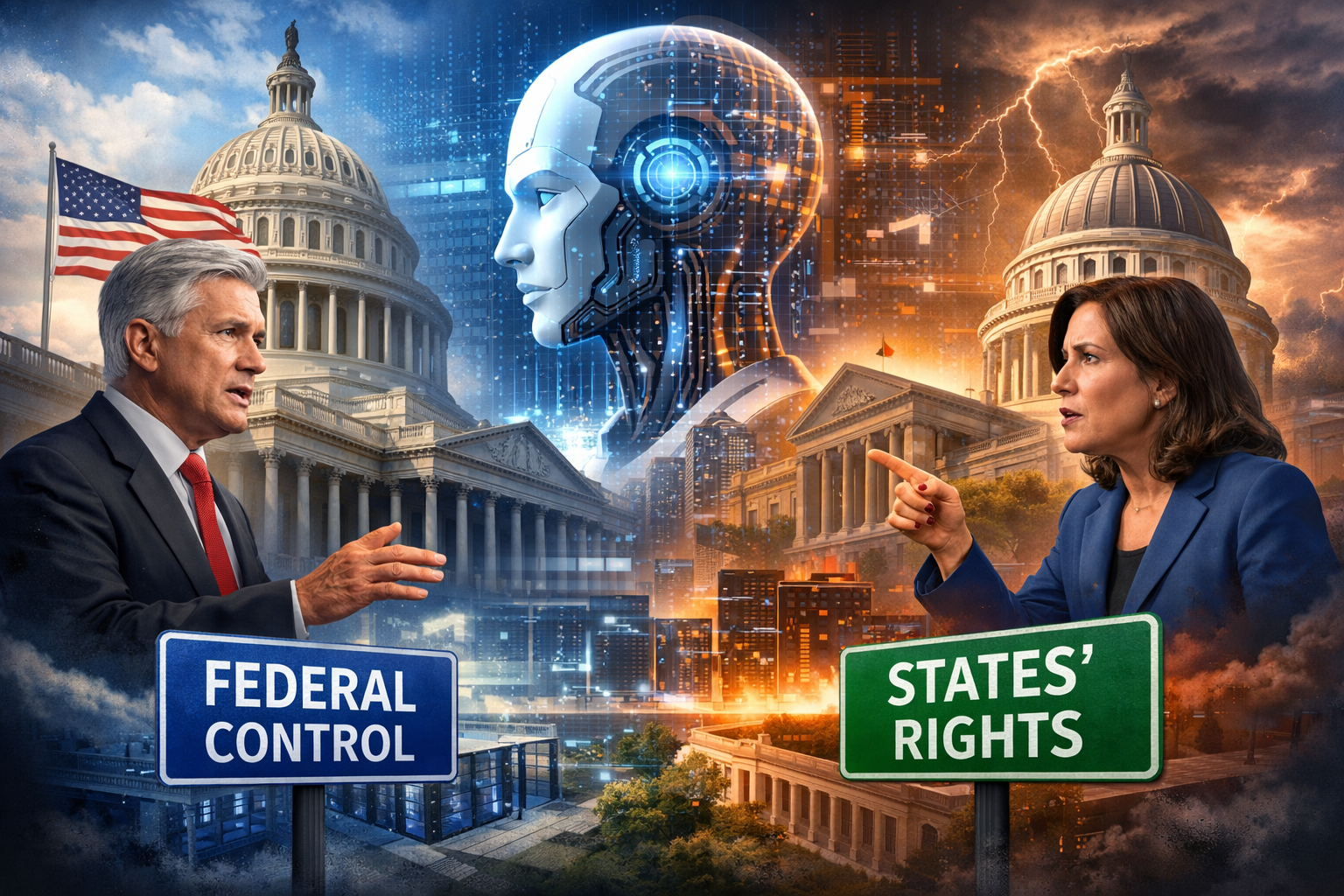
US Lawmakers Clash Over AI Regulation Authority
The debate over artificial intelligence regulation in the United States has intensified, with lawmakers divided on whether control should rest at the federal level or remain with individual states. As AI adoption accelerates across industries, policymakers are under pressure to define clear governance frameworks that balance innovation with safety.
Table of Contents
ToggleFederal AI Blueprint Sparks National Debate
At the center of the conflict is a proposed federal AI blueprint introduced in 2026. The framework aims to limit strict state level restrictions and establish a unified national regulatory approach. Supporters argue this will prevent a fragmented system that could slow down innovation and weaken US competitiveness against global AI leaders like China.
This push for standardization comes as AI ecosystems rapidly evolve, with tools like Claude, Gemini, and ChatGPT becoming central to business and consumer applications. For a deeper understanding of how these models compare, explore detailed insights on Claude vs ChatGPT and Gemini vs ChatGPT.
State Leaders Push Back Against Federal Control
The proposal has triggered strong opposition from state leaders and Democratic lawmakers. Critics argue that limiting state authority could prevent local governments from responding effectively to AI related risks such as misinformation, data privacy issues, and algorithmic bias.
Senator Ed Markey and others have warned that federal preemption may benefit large technology companies while reducing the ability of states to protect their citizens. This concern reflects broader fears about unchecked AI development and its societal impact.
Political Divide Shapes AI Policy Direction
The clash highlights a deeper political divide over how AI should be governed. Federal advocates emphasize scalability, economic growth, and global competitiveness. In contrast, state level proponents prioritize flexibility, localized oversight, and faster regulatory responses.
This disagreement has created legislative roadblocks in Congress, with bipartisan resistance and opposition from dozens of state attorneys general complicating efforts to pass a unified policy.
Infrastructure and Data Center Expansion Concerns
Beyond regulation, the debate also extends to AI infrastructure. Advanced AI systems require large scale data centers with significant energy demands. While federal authorities are encouraging rapid expansion to support innovation and national security, some states are considering restrictions due to environmental and resource concerns.
As AI infrastructure grows, comparisons between leading AI platforms such as Perplexity vs ChatGPT and Gemini vs Copilot are becoming increasingly relevant for businesses evaluating AI adoption strategies.
Impact on the Future of AI Governance
The outcome of this regulatory battle will play a critical role in shaping the future of AI in the United States. A centralized federal framework could streamline innovation and investment, while stronger state involvement may ensure more adaptive and localized protections.
Ultimately, the balance between federal authority and state autonomy will determine how effectively the US can lead in AI development while addressing ethical, economic, and societal challenges.