OpenAI Opens Cybersecurity Model to Defenders in Race With Anthropic
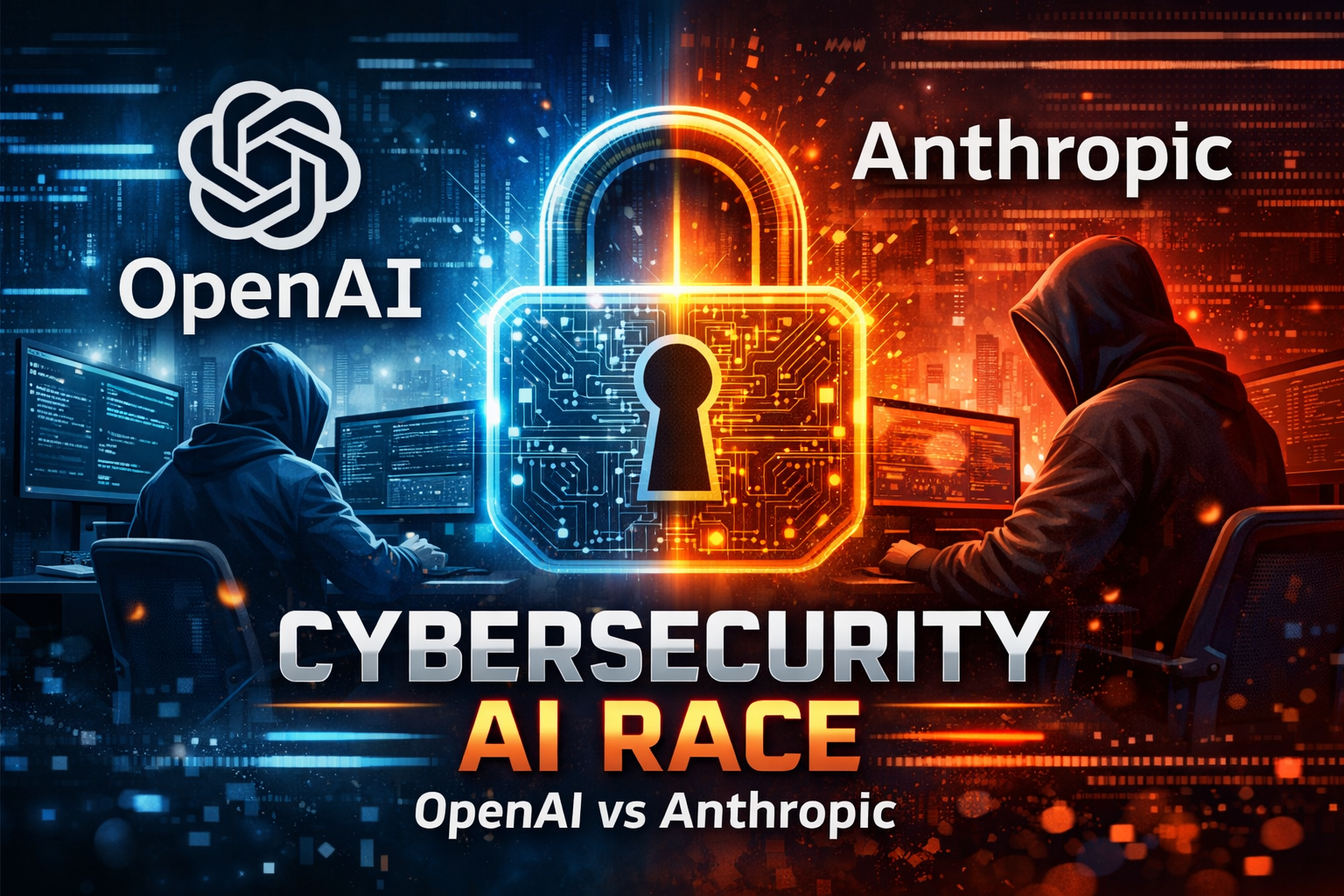
In a major shift toward defensive AI deployment, OpenAI has launched its new cybersecurity-focused model, GPT-5.4-Cyber, granting access to thousands of vetted security professionals. The move signals an intensifying race with rival Anthropic, which recently introduced its own defensive AI system, Mythos.
The release marks a strategic pivot in how advanced AI models are distributed. Instead of broad public access, OpenAI is prioritizing controlled deployment through its Trusted Access for Cyber (TAC) program. This allows verified defenders including ethical hackers, security researchers, and enterprise teams to leverage powerful AI capabilities for threat detection and response.
Purpose Built AI for Cyber Defense
GPT-5.4-Cyber is a fine-tuned version of OpenAI’s flagship model, specifically optimized for cybersecurity tasks. Unlike general-purpose AI systems, this model is designed to:
- Analyze malware and suspicious code
- Assist in vulnerability detection
- Support reverse engineering workflows
- Simulate potential attack scenarios for defense planning
Notably, the model reportedly lowers some refusal boundaries in strictly controlled environments, enabling deeper analysis of malicious code while maintaining safety guardrails.
For a broader understanding of OpenAI models and their evolution, explore the OpenAI models guide
Limited Access to Prevent Misuse
Both OpenAI and Anthropic are adopting a cautious approach. By restricting access to trusted users, they aim to prevent misuse of powerful AI systems that could otherwise be exploited by cybercriminals.
This mirrors Anthropic’s rollout of Mythos, highlighting a shared industry concern: AI is becoming a double-edged sword in cybersecurity. While it can strengthen defenses, it can also accelerate attacks if placed in the wrong hands.
The restricted rollout reflects growing fears of an AI-driven cyber arms race, where attackers and defenders both leverage increasingly advanced tools.
Industry Shift Toward Defensive AI
The competition between OpenAI and Anthropic is not just about model performance but about positioning in the cybersecurity ecosystem. Companies are now racing to become the default AI provider for security operations.
This shift aligns with broader trends in AI adoption, where specialized models are replacing general-purpose systems in high-risk domains.
If you are comparing how different AI systems approach safety and performance, you can explore detailed comparisons like Claude vs ChatGPT or Gemini vs ChatGPT
What This Means for the Future
OpenAI’s cybersecurity model launch signals a new phase in AI deployment one where access is selective, use cases are specialized, and safety is tightly controlled.
As AI continues to evolve, the balance between openness and restriction will define how effectively these technologies can be used to defend against real world threats.
The race between OpenAI and Anthropic is just beginning, but one thing is clear: cybersecurity is becoming one of the most critical battlegrounds for the future of AI.